dedicated to perimeter safety and security




March 2026 Issue
In our March issue, perimeter strategy is no longer about barriers. It’s about decisions.
In This Issue:
- Industry Trends: The fence line is dissolving. Software now defines the boundary—and drones are operating on both sides of it.
- Energy & National Resilience: DHS expectations have shifted. Can your perimeter take a hit and keep operating?
- Data Centers & Communications: In uptime-driven environments, perimeter failure isn’t a security event. It’s a revenue event.
- Identity & Access: What if authentication never stopped? Behavioral signals are turning identity into continuous verification.
- Unified Management: Two takes on what’s finally working—Milestone on AI-powered prevention, and smartPerimeter.ai on why GSOCs and modern PSIM platforms are delivering measurable results.
- ISC West Editor’s Picks: The best perimeter security companies at the show.
- ISC West Perimeter Education Track: smartPerimeter.ai’s sponsored sessions examine operational data, autonomous response, and next-generation perimeter risk.
Awards: 2026 smartPerimeter.ai nominations are open. Innovation is being recognized.
Explore the full March issue and see where perimeter security is headed.


Trends
From Lines to Logic: Software Is Redefining Perimeter Security Design
For much of its history, perimeter security has been defined by physical boundaries. Fences, walls, gates, cameras, and guard posts formed a clear boundary between “inside” and “outside.” When that line was crossed, alarms were triggered and people responded. The model was linear, predictable, and largely hardware-driven.
That approach still has value. Physical barriers, detection systems, and human response remain essential. But they are no longer enough on their own. Across logistics hubs, utilities, campuses, manufacturing sites, data centers, and critical infrastructure, the perimeter is evolving from a fixed boundary into a software-designed system. Increasingly, perimeter security is less about where a line is drawn and more about how decisions are made when activity occurs near, at, or beyond that boundary.
The Limits of a Hardware-Defined Perimeter
Traditional perimeter security programs were shaped by physical constraints: where a fence could be installed, where a camera could see, or where a guard could 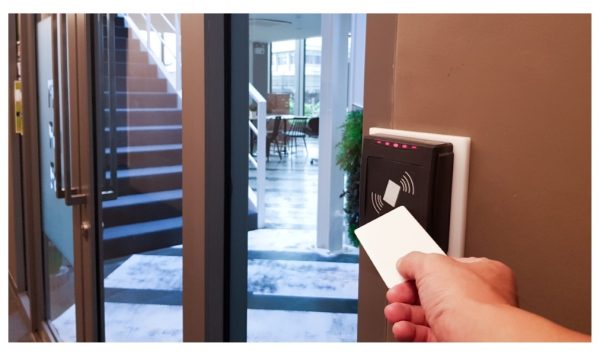 be posted. Effectiveness was often measured in linear coverage, device counts, or response times. The underlying assumption was straightforward: a breach equaled a threat, and the job of the perimeter was to detect and report that breach.
Modern threats have complicated that assumption. Many perimeter-related incidents today involve:
- Reconnaissance and probing rather than immediate intrusion
- Credential misuse or insider activity
- Coordinated events that combine physical presence with cyber or operational tactics
In these scenarios, the perimeter does not fail because hardware is missing. It fails when systems operate independently, context is lost, and decisions are delayed or prioritized incorrectly.
This gap is driving a shift toward software as the defining element of the perimeter.
What a Software-Designed Perimeter Looks Like
A software-designed perimeter is not constrained to a fence line. It extends beyond the fence line based on risk, activity, and operational context. Detection and response are shaped by data rather than distance alone.
Inputs may include:
- Early detection technologies such as radar, fiber sensing, or ground-based analytics
- Video analytics capable of classifying people, vehicles, and behaviors
- Access control and identity systems that provide context about authorization and intent
- Environmental, operational, and time-based data
The role of software is to unify these inputs into a common operational view and apply logic to them. Platforms increasingly emphasize correlation, workflow, and prioritization rather than isolated alerts. The objective is not simply to notify operators that something happened, but to help determine what matters, why it matters, and what action is appropriate.
Managing Volume and Complexity
One of the most persistent challenges in perimeter security is volume. Sensors, cameras, and detection systems generate large volumes of events, many of which require review. Over time, this can strain staffing models and reduce effectiveness.
In this model, the perimeter becomes a decision framework. It filters and validates information, escalates only what requires attention, and supports operators with clearer, more actionable intelligence.
Convergence and Context
As software plays a larger role, perimeter security increasingly overlaps with access management, identity, and networked systems. Credentials, schedules, operational data, and even cybersecurity signals can influence how perimeter events are interpreted.
This convergence does not eliminate the distinction between physical and digital security, but it recognizes that threats and risks often span both domains. A software-designed perimeter can incorporate these inputs without requiring operators to manually piece together information from separate systems.
The practical outcome is improved situational awareness and more consistent decision-making across teams.
Getting to the Decision Faster
Physical barriers, sensors, and cameras will remain foundational elements of perimeter security. What is changing is how those elements are connected, interpreted, and acted upon. Most barrier solutions are designed to include sensors and communications, creating smart barriers.
The modern perimeter is becoming less of a static boundary and more of a decision-oriented system, accelerating threat assessment and response.
The perimeter line still exists. But the value now lies in the decisions made around it.
-Mark McCourt, Publisher




Drones are Reshaping Perimeter Security—As Infrastructure and as a Threat
Drones now sit on both sides of the perimeter equation. When deployed by enterprises, they expand coverage, improve situational awareness, and reduce patrol costs. When deployed over enterprise property by unauthorized actors, they introduce a fast-moving, airborne risk.
Enterprises—from critical infrastructure operators to corporate and educational campuses—must maintain real-time awareness across large outdoor environments with multiple access points, heavy vehicle and pedestrian traffic, and constant change. Drones are emerging as scalable, repeatable infrastructure that strengthens risk management while improving operational efficiency.
Adoption reflects that shift. The global commercial drone market, valued at $30 billion in 2025, is projected to exceed $55 billion by 2030, according to Grand View Research, driven by measurable return on investment and the demand for persistent perimeter visibility.
Autonomous Drones Replace Human Patrols
Security operations are shifting from humans collecting data to humans analyzing it. Autonomous drones increasingly handle exterior patrols, remote asset monitoring, and large-perimeter coverage—operating without fatigue, overtime exposure, or liability risk. When paired with trained personnel, they extend human capability rather than eliminate it.
BVLOS Is the Key to Real Coverage
Beyond Visual Line of Sight (BVLOS) transforms drones from tactical tools into operational systems. Utilities, rail operators, pipeline companies, and logistics providers are advancing adoption because manual inspection and patrol do not scale across long corridors and distributed assets.
Regulatory approval for BVLOS continues to evolve, but commercial demand is accelerating. As operational necessity grows, policy frameworks are expected to adapt to reflect real-world deployment and risk management requirements.
Drones as First Responders Are Becoming Standard Practice
Public safety agencies increasingly deploy drones as the first unit on scene, delivering live situational awareness before officers or firefighters arrive. Commercial and educational campuses are adopting similar models. The result is faster assessment, improved decision-making, reduced personnel exposure, and shorter response times.
Modular Payloads Drive ROI
Modern security drones are not single-purpose devices. Payload modularity allows a single airframe to support thermal imaging at night, high-zoom inspection during daylight hours, loudspeaker deterrence, or emergency communications relay. Sensors continue to become faster, lighter, and more intelligent, expanding data-gathering and transmission capabilities.
By consolidating security, safety, inspection, and operational monitoring onto one adaptable platform, organizations reduce both cost and system complexity while increasing overall utility.
Supply Chain Trust Is Now a Security Requirement
Where a drone is manufactured—and how its components are sourced—matters. Bills of materials are increasingly included in RFPs, driven not only by the National Defense Authorization Act but also by broader risk management considerations. Buyers are evaluating supply chain transparency to reduce brand exposure, operational disruption, insurance scrutiny, and data sovereignty concerns.
Trusted supply chains and domestic manufacturing are becoming competitive differentiators, particularly for organizations operating in critical infrastructure and regulated environments. For example, Asylon manufactures its aerial drones and ground robots in the United States.
Drones are strengthening perimeter performance, improving cost efficiency, and expanding risk management capabilities. Their role in enterprise security is still evolving, and broader adoption is likely as regulatory clarity and operational models mature.
Drone Detection Has Become a Perimeter Requirement
If drones are now standard operational tools, unauthorized drones are standard threats. Facilities that once focused primarily on fence breaches and vehicle ramming must now address airborne intrusion—low cost, difficult to attribute, and increasingly accessible.
Drone detection has shifted from specialized defense technology to a core perimeter discipline.
The global counter-UAS (drone detection) market is projected to grow from approximately $6.6 billion in 2025 to more than $20 billion by 2030, according to MarketsandMarkets, representing a 25% compound annual growth rate (CAGR)—significantly outpacing the projected growth of the broader commercial drone market.
The following trends are driving that expansion.
Single-Sensor Detection Is Dead
Radar alone misses small drones. RF alone misses autonomous flights. Cameras alone fail in bad weather.
Modern drone detection is multi-sensor by design, combining:
- RF spectrum monitoring
- Radar optimized for low-RCS (Radar Cross Section) targets
- Electro-optical and thermal imaging
- AI-driven classification and tracking
For example, Echodyne provides precision radar as the data driver for accurate and timely mission control, slewing optics, sounding alarms, reducing false alarm rates, and making better decisions.
Detection Without Decision Is Security Theater
Early drone detection systems flooded operators with alerts and false positives. That era is ending.
Modern platforms focus on threat scoring, answering:
- Is it intentional or incidental?
- Is it autonomous or piloted?
- Is it approaching critical assets?
Modern platforms focus on filtering noise before it reaches the SOC, reducing false positives and prioritizing credible threats. Companies such as PureTech Systems specialize in advanced analytics designed to minimize nuisance alerts and deliver higher-confidence detections to operators.
Counter-UAS Mitigation Is Still Constrained by Law
Here’s the uncomfortable truth: most private organizations cannot legally neutralize a drone, even if it’s clearly hostile.
Mitigation options exist—RF disruption, protocol manipulation, interceptors, directed energy—but civilian use remains heavily restricted.
While private organizations are restricted to drone detection, we forecast drone defense will expand beyond government agencies through more focused technologies and duty of care reality.
In the meantime, private organizations can focus on detection, attribution, and escalation workflows in lieu of takedowns.
Swarms Change Everything
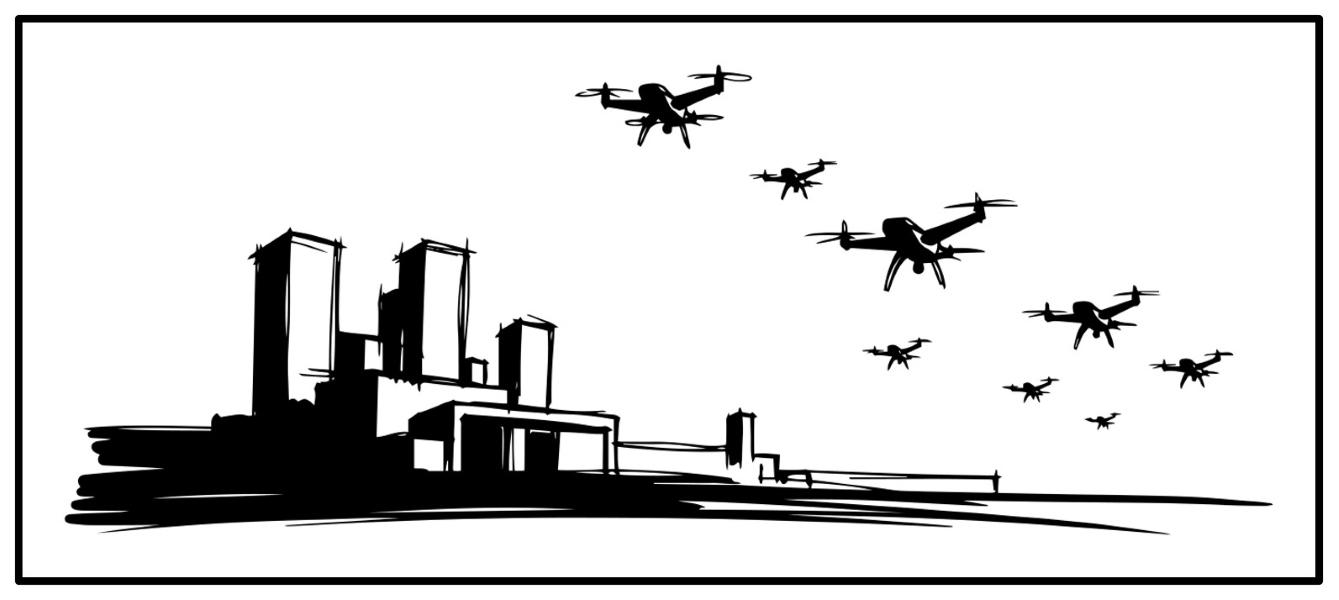
One drone is manageable. A coordinated swarm can overwhelm single-sensor systems and manual response.
Swarm defense requires:
- Pattern recognition
- Distributed sensors
- Automated correlation across sites
Ignoring this threat creates material exposure. Drone detection must be architected as a layered perimeter system, not deployed as a bolt-on product. Layered perimeter systems, including drone detection, require significant investment. This is another measure/counter-measure market growth driver.
Drone Detection Is Becoming Part of the Security Stack
- Leading organizations are integrating drone detection data into unified security architectures that connect intelligent sensors, communications, analytics, and response workflows: Reliable communications, single-pane-of-glass intelligence centers
- Data analytics and AI-driven alarm management
- Human-in-the-loop investigation and response
The goal is unified situational awareness—not a separate drone screen.
To borrow from the film Don’t Look Up: look up for airborne intrusion, and look down for comprehensive situational awareness.
If your perimeter security strategy stops at ground level, it leaves you exposed.


DHS is Framing Energy Sector Perimeter Security as National Resilience
 Energy, electricity, and oil and gas operators don’t get to choose whether they are targets. They’re a target because the impact of a successful physical attack is outsized: cascading outages, environmental damage, public panic, market disruption, and (in the worst cases) loss of life. The Department of Homeland Security (DHS) has been tightening the language and expectations around critical infrastructure security and resilience for years, and the trajectory is clear:
Perimeter protection is no longer a facilities issue—it’s a national risk-management obligation.
What’s changing right now is not just the threat landscape. It’s the policy posture: risk-based, performance-oriented expectations that push operators toward demonstrable outcomes—deterrence, detection, delay, response, recovery—in response to complex incidents.
DHS Policy Direction: Outcomes, Shared Responsibility, Complex Incidents
DHS has made clear that critical infrastructure protection is a shared mission across federal agencies, sector risk management agencies (SRMAs), and owners/operators. It has also emphasized that today’s risk environment includes complex, cross-domain incidents—physical and cyber, coordinated, fast-moving, and designed to create cascading effects. That framing appears in DHS’s 2024–2025 critical infrastructure risk-management cycle guidance and in the broader federal effort to clarify SRMA roles and strengthen sector accountability.
At the perimeter, the message is direct: prove your facility can take a hit and continue operating. For energy operators, perimeter security is increasingly evaluated through the lens of:
- Operational Resilience: How long can service be sustained under attack?
- Consequence Management: How quickly can systems be isolated, rerouted, or restored?
- Cross-Functional Integration: Physical security, OT, IT, and emergency management operating as a unified function
Accordingly, large-scale exercises and assessments are being emphasized, including combined cyber-physical security exercises involving thousands of participants, as reflected in recent CISA year-in-review reporting.
NERC CIP-014: Formalizing Physical Attack Planning in Electricity
For transmission operators, the most concrete perimeter-security mandate is NERC CIP-014-3. The standard requires transmission owners to identify substations and primary control centers that, if subjected to a physical attack, could cause instability, uncontrolled separation, or cascading failures—and to reassess that risk on a recurring basis.
Two elements are central to perimeter strategy:
- Risk assessment and identification of critical transmission substations and associated primary control centers (with reassessment intervals tied to whether critical assets are identified).
- Independent third-party verification of that risk assessment.
CIP-014 effectively pushes a defined subset of grid assets into a higher-assurance physical security posture. It has been a major driver of modern substation hardening, including ballistic- and vandal-resistant perimeter upgrades, layered detection architectures, and response playbooks designed for determined adversaries.
NERC Physical Security Guidance: Shaping Budgets Beyond Compliance
Even outside the formal scope of CIP-014, NERC’s 2025 guidance on physical security risk assessments and best practices signals clear expectations: risk-based prioritization, continuous improvement, and evidence-driven executive oversight. The guidance emphasizes perimeter integrity evaluations, audit frequency aligned to asset criticality, and incident response planning designed to manage information flow during fast-moving events.
The document also acknowledges a hard reality: no perimeter strategy can guarantee prevention against a determined adversary. The emphasis, therefore, shifts to resilience, interdependence, and rapid information exchange.
What Leading Energy Companies Are Doing Now
Across electricity, energy, and oil & gas, the best programs look similar—because the threats are similar and the operational consequences are brutal.
1) Layered protection hardens boundaries and increases situational awareness
Modern sites are designed with rings:
- Outer boundary: Deterrence + early detection
- Controlled access layer: Credentialing, vehicle control, anti-tailgating
- Asset-proximate layer: High-value targets: transformers, control houses, valve yards, tank farms
- Control-room layer: Primary control centers and critical comms
This matches the NERC best-practice framing: prioritize by criticality, then apply proportionate countermeasures.
2) Physical and cyber are being fused operationally (not just talked about)
The perimeter is now one of the most common crossover points between physical intrusion and OT disruption. Operators are employing shared alarm taxonomy, shared incident command, shared playbooks, and joint exercises (which CISA has been emphasizing nationally).
3) Response time is treated as a design parameter
Perimeter security is increasingly engineered around time-to-detect, time-to-assess, and time-to-respond. If your response time is 12 minutes, your perimeter security program must delay intrusions for more than 12 minutes.
The Winning Perimeter Tech Stack Design
Intelligent detection:
- Fiber and fence-mounted intrusion detection (cut/climb/defeat attempts)
- Buried or surface vibration sensing for covert approaches
- Dual-tech perimeter sensors to reduce nuisance alarms in harsh environments
These remain core because they provide reliable physics-based detection when cameras are blinded by weather, darkness, or deliberate obstruction.
Radar + Thermal + Analytics: The New Standard Triad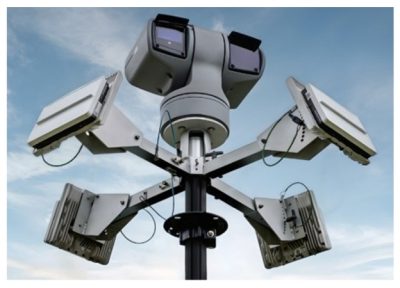
Electric substations and tank farms are adopting short-range radar (wide-area detection) combined with thermal imaging (identification in darkness) and AI video analytics (classification and tracking). This is where perimeter is going: persistent detection that doesn’t depend on perfect lighting or a human staring at screens.
One company to watch here is Echodyne, pushing compact radar into security applications where cameras alone fail.
LiDAR Delivers Operational Value
LiDAR is increasingly used for 3D detection and tracking, better geofencing, and reduced false positives in cluttered scenes.
Active Deterrence and Autonomous Presence
Energy sites are experimenting with:
- Remote voice-down / audio challenge
- Intelligent lighting tied to intrusion zones
- Robotic or autonomous patrol concepts in perimeter-rich environments
The result is coverage at large sites with limited staff facing increasing risk.
Access Control Hardening Where It Matters
- Gate/vehicle access control with anti-passback logic
- Credential governance: contractor sprawl is a real vulnerability
- High-assurance locks, tamper sensing, and alarmed enclosures on control houses and critical cabinets
Centralized Alarm Management and Evidence-Driven Response
The best operators are converging on:
- Alarm aggregation: SOC/GSOC or hybrid operations
- Automated incident workflows
- Video/radar/IoT single pane of glass for faster assessment
- Audit trails for compliance and post-incident learning
NERC’s guidance is explicit that assessments should inform countermeasure design and that incident response must be built for fast-paced, dynamic events with controlled information flow.
Who’s Leading The Perimeter Solution Market For Energy Use Cases?
A few names show where the market is headed:
- Senstar — expanding sensor portfolio and situational awareness.
- Echodyne —radar that materially improves detection in wide-area, low-visibility perimeter environments.
- Southwest Microwave — commonly cited in perimeter microwave/radar deployments.
These aren’t the only players, but they reflect the trend: multi-sensor detection, fewer blind spots, faster verification, and measurable outcomes.
Technology Focus: The Perimeter Failures DHS Policy Wants Resolved
Energy operators still get hurt by the same recurring issues:
- Nuisance alarms that train teams to ignore alerts
- Camera-only perimeters with no reliable detection layer
- Contractor access chaos: Bad credential hygiene, unmanaged keys, informal workarounds)
- No engineered delay: Intruders reach critical assets before anyone can intervene
- Fragmented ownership between facilities, security, OT, and corporate risk
The direction of DHS + sector standards is to push organizations away from “installed equipment” and toward operationally proven security capability — assessed, exercised, audited, and continuously improved.
What Good Looks Like in 2026: A Perimeter Program You Can Defend
For energy operators, the forward-looking benchmark is straightforward:
- You can clearly articulate your Design Basis Threat, and it reflects current realities.
- Detection performs in adverse weather, low visibility, and under deliberate interference.
- Engineered delay aligns with validated response times.
- Response procedures are practiced, fast, and integrated across physical security, OT, and IT.
- Executive leadership funds the program because the risk is quantified and defensible.
The energy sector is moving steadily toward perimeter programs that are measurable, exercised, and resilient under scrutiny.

KEY SECTOR FOCUS
Why Perimeter Security Now Defines Data Center Uptime
How Data Centers and Communications Facilities Are Rethinking Physical Security
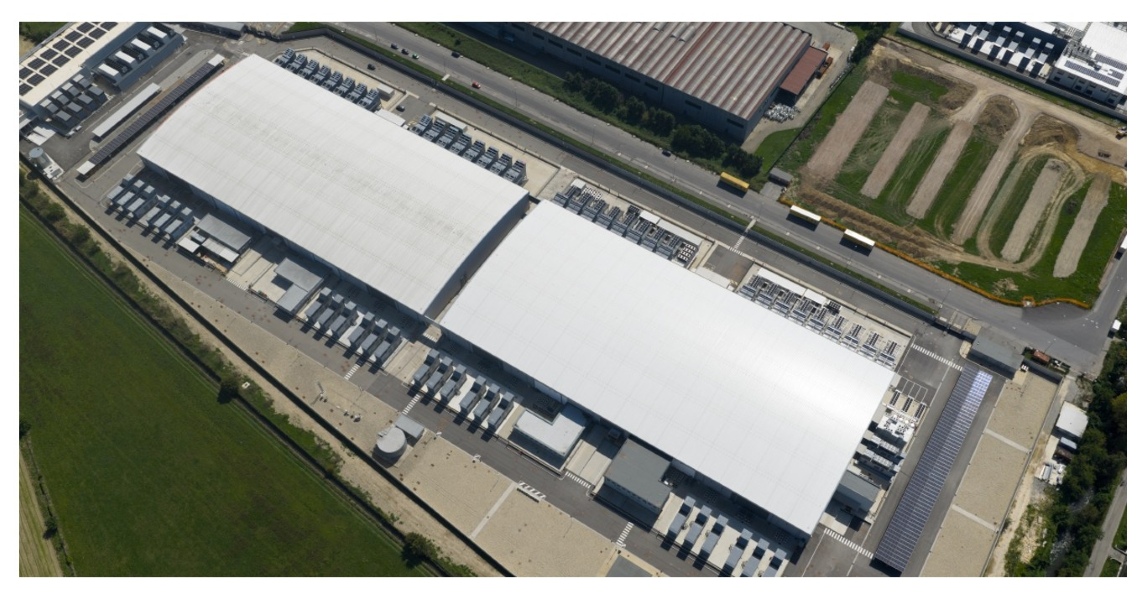
For data centers and communications facilities, perimeter security is no longer about keeping trespassers out—it is a core safeguard for keeping businesses online. In an era where milliseconds of downtime ripple through financial markets, healthcare systems, logistics networks, and cloud platforms, the physical perimeter has become a frontline control for business continuity.
Unlike other commercial sectors, these facilities operate under a brutal truth: if the perimeter fails, contracts fail. That pressure has driven operators to deploy some of the most advanced—and capital-intensive—perimeter safety and security programs in the physical security industry.
But maturity doesn’t mean uniform protection. While new hyperscale campuses set the bar high, legacy sites and remote communications hubs still expose vulnerabilities that adversaries, criminals, and activists work hard to exploit.
Security Leaders Face a Patchwork of Mandates
No single regulation governs perimeter security for data centers or communications facilities. Instead, programs are driven by overlapping pressures: Uptime Institute Tier standards, SOC 2 and ISO 27001 audits, DHS and CISA critical infrastructure guidance, customer service-level agreements (SLAs), and increasingly stringent insurance requirements.
Individually, these frameworks rarely mandate specific perimeter technologies. Collectively, they send an unmistakable message—perimeter failure is a material business risk. For hyperscale and colocation providers, that risk translates directly into lost revenue, legal exposure, and reputational damage.
Layered Perimeters: The De Facto Design Model
The outermost layer is intentionally physical. Crash-rated fencing, hardened gates, and fixed or retractable bollards are now standard in new construction. Where space allows, wide standoff distances mitigate vehicle threats before alarms are ever triggered.
Detection follows. Fence-mounted fiber optic and vibration sensors remain foundational, particularly in high-security data centers where false alarms are unacceptable. Radar and microwave systems monitor open ground between perimeter lines, while thermal and low-light cameras provide continuous verification regardless of lighting or weather conditions.
Modern facilities overwhelmingly rely on a layered perimeter strategy designed to deter, detect, delay, and respond—preferably in that order.
The outermost layer is unapologetically physical. Crash-rated fencing, hardened gates, and fixed or retractable bollards are now standard on new builds. Wide standoff distances, when possible, deter vehicle threats before alarms need to be activated.
Detection comes next. Fence-mounted fiber optic and vibration sensors remain a staple, particularly in high-security data centers where false alarms are unacceptable. Radar and microwave sensors protect open ground between perimeter lines, while thermal and low-light cameras provide continuous verification regardless of lighting or weather.
Access control is a perimeter function, not just a building function. Vehicle gates integrate credentialing, license plate recognition, and strict visitor workflows. Pedestrian access points rely on hardened entry structures and mantrap-style controls to ensure separation of public, vendor, and employee traffic.
All of these systems converge into a centralized monitoring system. Whether operated in-house or outsourced, 24/7 security operations centers are expected to verify alarms rapidly and escalate with documented response times tied directly to service-level agreements.
Lack of compliance is a significant challenge. Controls that are overly cumbersome invite circumvention, and programs that lack efficacy provide only the illusion of protection. The sector’s ongoing pursuit is clear: security that is effective, frictionless, and embedded into operations. The scale of investment—and the consequences of failure—have accelerated that expectation dramatically in the data center era.
Communications Facilities: Smaller Sites, Greater Exposure
Telecommunications switching centers, cable headends, and fiber hubs share the same operational criticality as data centers—but rarely the same budgets or staffing levels.
Many of these sites are unmanned, geographically dispersed, and decades old. As a result, perimeter security programs rely heavily on automation. Fence sensors, remote video verification, and solar-powered detection systems are common, reducing dependence on on-site personnel.
Integrated video and access platforms are common, particularly where operators need a consistent security policy across hundreds—or even thousands—of locations.
The threat profile is different as well. Copper theft, vandalism, and sabotage remain persistent risks, often driven by opportunistic crime rather than sophisticated attackers. Yet the operational impact—service outages, emergency repairs, regulatory scrutiny—can be just as severe.
What the Sector Gets Right
Compared to most commercial industries, data centers and communications operators have made real progress.
C-suite accountability has become non-negotiable. In an environment where downtime triggers contractual penalties, audit scrutiny, and insurance exposure, perimeter security is no longer confined to facilities or IT teams. Executive oversight now extends to identity controls, device governance, and compliance enforcement. Training, policy adherence, and performance metrics are embedded across departments—reflecting a clear reality: security is an operational mandate, not a discretionary initiative.
Layered deterrence has significantly reduced casual intrusion. Sensor fusion—combining radar, fence detection, and video analytics—has lowered false alarms and improved response efficiency. Most importantly, perimeter-first design is now embedded in new construction rather than bolted on later.
Insurance carriers deserve some credit here. Loss-prevention audits and premium adjustments have forced operators to document, test, and maintain their perimeter controls with a discipline that security teams alone often struggle to enforce.
Where the Gaps Still Exist
Despite the sophistication, weaknesses remain. Legacy facilities are frequently retrofitted rather than redesigned, resulting in uneven coverage, inconsistent sensor performance, and persistent blind spots. Some operators still lean too heavily on video without sufficient physical deterrence, mistaking visibility for true protection.
Integration remains another fault line. Physical security teams and network operations centers often operate in parallel rather than in coordination, leaving organizations blind to coordinated physical and cyber events. In a world where a fence breach can precede a network attack, that operational separation is increasingly difficult to justify.
Perhaps most concerning, many organizations still frame perimeter security as a labor problem—guards, patrols, response—rather than as a systems engineering challenge. That mindset doesn’t scale, and it doesn’t survive labor shortages.
Most concerning, some organizations still treat perimeter security primarily as a labor challenge—focused on guards, patrols, and response staffing—rather than as a systems engineering discipline. That approach does not scale, and it does not hold under sustained labor constraints.
The Next Evolution: From Fence Line to Boardroom
The next phase of perimeter security is already underway. AI-driven alarm triage is beginning to prioritize incidents based on operational impact—not simply intrusion type. Robotics and autonomous patrol systems are emerging as force multipliers, particularly across expansive hyperscale campuses. Physical security events are increasingly integrated into cyber and operational dashboards, linking perimeter alarms directly to uptime risk, contractual exposure, and revenue impact.
For data centers and communications facilities, the perimeter is no longer a passive boundary—it is the first measurable control in the uptime chain. And increasingly, it is a metric the board understands.
Physical and digital perimeters now operate as a unified line of defense. When perimeter protection fails, business continuity is rarely far behind.


Beyond the Fence Line: How AI-Powered Video Intelligence is Redefining Perimeter Security
Perimeter security has always been about drawing a line in the sand, establishing a clear boundary that separates protected assets from external threats. For decades, that meant fences, cameras, and alarms. The philosophy was straightforward: detect an intrusion, trigger an alert, and respond. But in a world where threats are growing more sophisticated, and security teams are stretched thinner, that reactive model is showing its limitations.
The good news? We’re entering an era where perimeter security can do something it’s never been able to do effectively before: help prevent incidents rather than just document them.
Smart video security and AI-powered analytics are fundamentally changing what’s possible at the perimeter. We’re moving beyond simple motion detection to systems that can understand context, recognize patterns, and distinguish between a genuine threat and a deer wandering across the property at 2 a.m. More importantly, these technologies are helping security teams do more with less, a critical capability when budgets can be tight and qualified personnel harder to find.
The global perimeter security market reflects this transformation. According to Fortune Business Insights, the market was valued at $68.45 billion in 2023 and is projected to reach $142.41 billion by 2032, growing at a compound annual growth rate of 8.6%. That’s not just growth; that’s a fundamental shift in how organizations view perimeter protection.
 From Reactive Alerts to Proactive Intelligence
Traditional perimeter security operates in a reactive loop. A sensor trips, an alarm sounds, someone checks a camera, and all too often, a response team arrives after the intruder is long gone. This approach has two major problems: it generates an overwhelming number of false alarms, and it only identifies threats after they’ve already breached the perimeter.
AI-powered video analytics are changing this dynamic. By analyzing video data in real time and applying machine learning algorithms, modern systems can filter out most environmental factors like wind, weather, and animals that have historically plagued perimeter detection. According to analysis from the SIA 2026 Security Megatrends report, AI-driven solutions have reduced false alarms by around 60%, which means security personnel can focus their attention on genuine threats rather than chasing ghosts.
The bigger shift is in what these systems can detect before an incident occurs. Consider a scenario increasingly common in organized retail crime and supply chain theft: a vehicle appears near a facility’s perimeter three nights in a row, each time lingering just long enough to observe but not long enough to trigger a traditional alarm. An AI-powered system can identify this pattern, flag it for review, and allow security teams to take proactive measures before the actual breach attempt happens.
This is the move from detection to prevention. The technology isn’t just reporting what happened; it’s providing the intelligence to anticipate what might happen next.
The Power of Open Platforms and Sensor Fusion
Perimeter security is no longer just about cameras and fences. The most effective approaches today involve what the industry calls “sensor fusion,” integrating video with radar, LiDAR, fiber-optic detection systems, and other perimeter sensors into a unified platform.
The SIA’s Megatrends report went on to stress that buyers increasingly seek multi-use technologies that deliver operational insights alongside security benefits, with convergence spanning software, cameras, sensors, access control, and building systems. This integration creates unified platforms that enable intelligent control across physical and cyber domains.
An open platform approach is essential to making this work. When video management systems can communicate seamlessly with ground radar, thermal imaging, and access control regardless of manufacturer, the result is far more powerful than any single-vendor solution. The system becomes an orchestrated response mechanism where cameras automatically track and zoom in on targets detected by other sensors. Lighting systems can illuminate unauthorized occupants. Access control systems can initiate lockdown protocols.
This integrated approach also directly addresses the false positive problem. When multiple sensor types must confirm an event before an alert is triggered, confidence increases dramatically, and nuisance alarms drop sharply. An AI system that can also correlate video data with inputs like time of day, known patterns, and facility operations filters out even more noise before a human enters the picture. The practical impact is real: operators spend less time chasing unverified alerts, and guards aren’t dispatched on wild goose chases that pull them away from genuine priorities.
Turning Video from Cost Center to Operational Asset
Perimeter security systems are becoming operational intelligence platforms. The same AI analytics that help identify security threats can provide valuable insights for facility operations, traffic flow management, and business planning.
This matters because it changes the ROI conversation. Security has traditionally been viewed as a necessary expense, something organizations invest in hoping they’ll never need to prove its value. But when perimeter security systems can also provide data on gate efficiency, vehicle dwell times, delivery patterns, and facility utilization, they become operational assets that justify costs through multiple use cases.
Consider the forensic capabilities that AI-powered systems now provide. After an incident, security teams traditionally faced the tedious task of manually reviewing hours of video data. Modern AI systems can compress search time, allowing operators to quickly find specific vehicles, individuals, or behaviors across days or weeks of recorded video. This capability helps identify vulnerabilities and understand how threats evolve over time. When security systems provide measurable business value beyond risk mitigation, organizations begin to view them differently and invest accordingly.
For security professionals evaluating perimeter solutions, the question isn’t whether to adopt these technologies but how quickly to integrate them into existing infrastructure. Because while the fence line may remain stationary, what we can do to protect it is advancing rapidly.
By Barry Norton, Fellow, Milestone Systems
About the Author
Dr. Barry Norton is a Fellow, and former VP for Research, at Milestone Systems. He has 25 years of experience in AI, and has worked on large-scale applications in many industries, including as Head of Digital Platform at Mærsk.
You Can’t Teach an Old Dog New Tricks—But You Can Measure Them How Behavioral Identifiers Can Reshape MFA Identity & Access

Everybody has behaviors—and nearly any movement, rhythm, hesitation, or interaction is measurable. That measurable pattern is called a behavioral identifier.
It may not be as cinematic as the iris ID scene of Tom Cruise running through The Gap in Minority Report, but pairing a behavioral identifier alongside a physiological identifier could move us closer to truly spoof-resistant multi-factor authentication (MFA)—and into undeniable frictionless access.
The need is immediate. Mission-critical environments like data centers, hospitals, energy and utilities, and government facilities cannot afford weak identity assurance.
Last month’s smartPerimeter.ai identity feature covered physiological identifiers — the relatively stable physical traits about you that cannot be easily changed. The top four modalities include:
- Fingerprints
- Iris patterns
- Facial geometry
- Palm and vein structure
In this issue, we explore behavioral identifiers—the unique habits we develop that can be analyzed as patterns of repeatable actions.
You may not consciously think about them, but you carry them everywhere.
Gait Behaviors: Walking, Blinking and Heartbeat
Gait is an extremely powerful measurement for smart perimeters because it works from a distance, from either the front or back of a person. Stride length, step cadence, hip rotation, arm swing, blinking rhythm, weight distribution, acceleration, and speed can all be included when determining these patterns.
Heartbeat can also become part of the authentication layer when a wearable — such as a ring, watch, or smart insole is issued for the role.
Interaction Behaviors: Typing, Mouse Movement, Digital Signature, Touch Pressure
Are you a fast typer? The timing and hesitation between keystrokes can be captured as a personal identifier. These signals can also detect credential sharing, fraudulent logins, or online test taking by identifying unusual password timing or behavioral delays.
Mouse movement and signature behavior analyze path patterns, pressure, and clicking cadence to determine whether you are human (and not a bot trying to buy every Taylor Swift ticket for resale), or whether a document is being signed fraudulently.
Voice Behaviors: Cadence, Breathing, Resonance
Voice may be one of the most powerful modalities because it is multi-modal—both physiological (identifying YOU) and behavioral (continuously authenticating YOU).
Breathing patterns, nasal resonance, subtle vocal rhythms, and cadence create markers that are extremely difficult to replicate consistently over time. Someone may mimic your voice briefly, but sustaining your natural rhythm and hesitation patterns is another matter entirely.
Mobile Device Behaviors and System Navigation Habits
We are essentially walking around with identity sensors.
Modern mobile devices contain accelerometers, gyroscopes, and magnetometers that capture how we hold our phones, how often we log in, where we are, and how we navigate systems. IP patterns, time stamps, and login frequency all contribute to behavioral context.
With the overwhelming majority of the U.S. population carrying a mobile device, behavioral data is already being generated — whether we formally use it for authentication or not.
Examples of Multi-Modal Identity & Access Applications
The future of identity in hospitals, utilities, and government facilities is not single-modality. It is the combination of physiological and behavioral authentication—active and passive—for continuous authorization.
Imagine these scenarios:
- A physician authenticates once with facial recognition but is validated repeatedly in the background through voice cadence while recording patient notes.
- A utility worker passes through an identifier gate, while gait behavior is continuously analyzed.
- A government employee enters a secure clearance wing but triggers an alert if behavioral keystroke anomalies begin to appear.
If physiological identifiers verify what your body is, then behavioral identifiers verify what your body does with remarkable accuracy across repetitive patterns.
Identity and access permissions are no longer static. They are dynamic. It begins with initial identification of you, followed by consistent authentication and authorization of you through behavior as you move through the perimeter.
Imagine this 1-2-3 application:
- Everybody has physiological factors — your body (example: your face).
- Everybody has behavioral traits — your actions or movements (example: your continuous voice during conversation).
- Keep an existing badge, PIN, or password in the mix until YOU—and your employees — feel comfortable and have built TRUST in the process.
Combining physiological and behavioral identity factors into encrypted mathematical templates—vetted through governance, risk, and compliance (GRC) and legal review—creates an extremely powerful multi-factor solution that requires remembering zero knowledge.
Woof, woof.
I’m confident enough in this technology that I’ll bet you a dog treat you’ll soon feel comfortable moving toward a mobile, touchless, frictionless AID2entry experience.
Are YOU ready to learn some new tricks?
Join the conversation as I moderate a panel with three security experts on Face, Voice, PIN: The New Credential for Physical Access at ISC West on Tuesday, March 24, at 10:00 a.m.
By Doug OGorden
Cutting Through the Noise: How Unified Security Management Brings a Sharp Focus to Perimeter Protection
If you manage perimeter security for any kind of facility, you already know the problem: too many alarms and too many late-night notifications that turn out to be a stray animal, a gust of wind, or a shadow that tripped a motion detector. The noise is more than just annoying; it’s potentially dangerous. Because somewhere buried in all that clutter might be a real threat, and the more false alarms your team chases, the less attention they have left for the ones that matter.
This is the reality facing security professionals across nearly every sector, from logistics hubs and data centers to government campuses and critical infrastructure. And it’s driving a fundamental shift toward unified management, an approach that brings video, sensors, access control, and analytics together under a single platform so security teams can see, understand, and act on what’s happening across their entire perimeter – from one place. The old model of stacking disconnected sensors and hoping someone catches the right alert is giving way to integrated systems built on open platform video technology, smart analytics, and AI-powered tools that don’t just detect activity but help teams respond to it.
Breaking Down the Silos
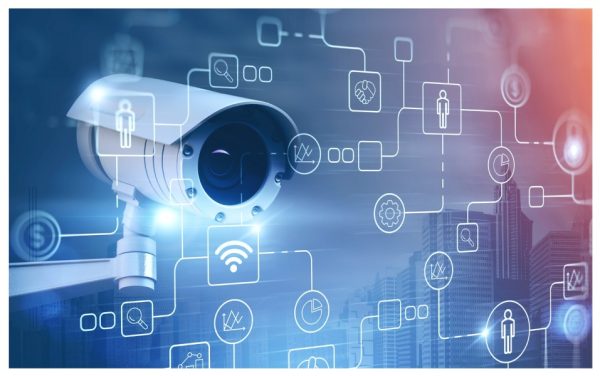 For years, perimeter security operated in disconnected layers. Video systems lived in one world. Access control lived in another. Alarm panels, intercoms, license plate readers, and environmental sensors all generated data, but rarely talked to each other. Security teams toggled between multiple interfaces, piecing together information while trying to make real-time decisions. It was like trying to conduct an orchestra when every musician is playing from a different sheet of music.
Unified management changes that equation. At its core, the concept is straightforward: rather than running separate systems that each handle one piece of the security puzzle, a unified approach connects them through an open platform video management system that serves as the central hub. Cameras, sensors, access control devices, and analytics all feed into a single operational view, giving operators the full picture instead of fragments. Open platform architecture means these systems are hardware agnostic, so organizations aren’t forced to rip out existing investments in cameras or infrastructure to get there. The VMS connects to what’s already in place and layers intelligence on top.
This matters because perimeter environments are rarely static. A distribution center might add a new loading dock. A campus might expand its parking areas. A government facility might need to temporarily increase monitoring around a sensitive building. The flexibility of a unified, open platform means security teams can scale and adapt without rebuilding from scratch every time conditions change.
That same openness also simplifies how organizations share information. Internal departments, from operations to risk management, can access relevant video data and reports through the same platform. And when an incident requires coordination with law enforcement or first responders, open systems make it straightforward to securely and quickly export and share critical evidence without format conflicts or proprietary barriers.
From Detection to Prevention
The security industry has talked about “proactive” for a long time, but we’re only now reaching the point where the technology genuinely delivers on that promise. The Security Industry Association’s 2026 Megatrends Report identifies this evolution as one of the defining trends in the industry, noting that AI is enabling a historic shift from detection and response toward actual prevention. The report also highlights the growing unification of the security experience layer, where platforms for access control, video, and intrusion detection converge into a single architecture that surfaces actionable insights rather than raw data.
In practical terms, what does this look like for perimeter security? Consider a unified VMS with integrated AI-powered video analytics monitoring a warehouse perimeter. Traditional motion detection would alert on anything that moves, leaving operators to sort through dozens of irrelevant notifications. An AI-driven system, by contrast, can distinguish between a person and an animal, between a vehicle approaching a restricted gate and a delivery truck following its normal route. It can flag a specific behavior, like someone loitering near a fence line or a vehicle circling a facility and push that alert not just to a control room monitor but to specific team members on mobile devices, along with the relevant video feed and contextual information.
This kind of intelligent filtering changes the math for security operations. Instead of watching walls of monitors and hoping to spot something, operators are freed to focus on verified, prioritized events. The SIA Megatrends report frames it well: AI-driven platforms are increasingly replacing the labor-intensive task of monitoring video feeds and ranking alarms, which allows security personnel to transition from reactive notification watchers to proactive risk analysts.
Smarter Tools, Faster Responses
The applications extend well beyond simple intrusion detection. Line-crossing alerts can notify teams instantly when someone enters a restricted zone, whether that’s a fenced perimeter, a rooftop, or a secure loading area. Tailgating detection at access-controlled entry points flags when a single badge scan lets two people through a door. Appearance-matching tools can help security teams track a person of interest across multiple cameras in seconds rather than hours. License plate recognition at entry points adds yet another layer of awareness, automatically cross-referencing vehicles against watchlists or flagging unauthorized traffic.
Under a unified management approach, all of this data feeds into a single operational picture rather than being scattered across separate applications. When an alert fires, the video, sensor data, access log, and map location appear together in a single interface, enabling faster decisions and more coordinated responses. That’s the practical payoff of unification: not just more data, but better context at the moment it matters most.
For organizations managing multiple sites, cloud connectivity adds another dimension. Hybrid deployments, combining on-premises processing for real-time operations with cloud storage and remote access, give security leaders the ability to monitor and manage dispersed facilities from a central location. Smaller operations can take advantage of cloud-native VMS options that provide advanced analytics and AI-powered search without the overhead of maintaining local server infrastructure. Either way, the cost model becomes more flexible, and the barrier to adopting unified management drops considerably.
If the machines stop, the business stops.
And that is the risk most organizations are still not prepared to explain—let alone manage.
Built to Evolve
This flexibility also speaks to one of the most critical and often underappreciated benefits of open platform architecture: protecting existing investments. Some VMS providers are moving toward closed ecosystems that require specific hardware from specific manufacturers. For organizations that have already invested in cameras, sensors, and networking infrastructure across a perimeter, being told they need to start over isn’t just frustrating; it can be a budget killer. Open systems take the opposite approach, integrating with a wide range of devices and third-party technologies through APIs and software development kits, so security teams can adopt new capabilities incrementally rather than all at once.
That incremental approach is becoming critical as the pace of innovation accelerates. Edge devices are getting smarter, with manufacturers embedding AI-lite analytics directly into cameras and sensors. Drone detection, thermal imaging, and autonomous patrol technologies are maturing rapidly. Digital evidence management is evolving to give organizations secure, license-free ways to store, share, and manage case-related video without proprietary lock-in. Each of these capabilities adds value, but only if the underlying management platform can bring them together into a coherent system of systems.
The security industry’s trajectory is clear. Data is becoming the most valuable asset in any security operation, and unified management platforms are the tools that transform raw data into intelligence. For perimeter security professionals, the opportunity is to move beyond the noise, beyond the false alarms and the disconnected systems, and toward a unified approach that’s smarter, more integrated, and built to evolve. The organizations that embrace unified, open platform management today won’t just be better protected. They’ll be better positioned for whatever comes next.
By Sam Phillips
About the Author: Sam Phillips is the Public Safety Lead at Milestone Systems.
Unified Management Comes of Age: How GSOCs, VSOCs, and PSIMs Are Finally Delivering on the Promise
Twenty years ago, PSIM (Physical Security Information Management) was sold as the silver bullet for complex security operations. The pitch was bold: unify alarms, video, access control, sensors, and communications into a single pane of glass that would give security leaders real-time situational awareness and faster, smarter decision-making.
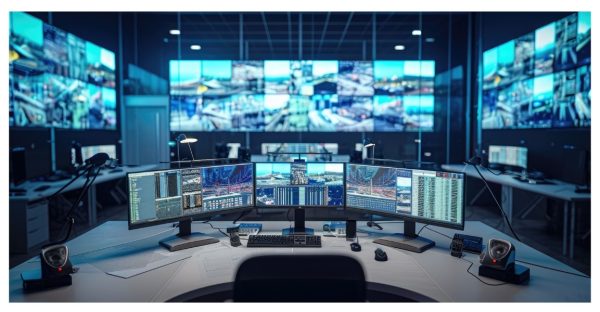 The reality? Most early PSIM deployments never lived up to the hype. They were expensive, rigid, and difficult to scale. Integration was brittle. AI didn’t exist in any meaningful way. Operators were still drowning in alarms—just on a prettier screen.
Fast forward to today, and something important has changed.
Unified management is finally working—not because the original PSIM vision was wrong, but because the technology ecosystem has caught up. GSOCs, VSOCs, and next-generation PSIM platforms are now converging into intelligent operational hubs.
Not reactive.
Not alarm-heavy.
Decision-driven.
And this time, the results are measurable.
From “Single Pane of Glass” to Decision Engine
GSOCs (Global Security Operations Centers) and VSOCs (Video Security Operations Centers) are evolving into enterprise command centers that fuse physical security, cyber signals, operational data, and external intelligence into actionable insight—not just awareness.
So what broke the old model?
Three things broke the old PSIM model wide open:
- Information fusion actually works
- AI-driven analytics reduce noise instead of creating more alerts
- Alarm management has shifted from volume to priority
The industry has finally moved past dashboard obsession and toward metrics that matter: response time, false alarm reduction, labor efficiency, and business continuity.
Information Fusion: Context Wins
Early PSIM platforms connected systems, but they didn’t understand them. An alarm was an alarm. A camera was a camera. Context lived entirely in the operator’s head.
Today’s platforms fuse video analytics, access events, perimeter sensors, drone telemetry, and even business data into a single operational narrative.
This is where companies like Hexagon and Genetec have shifted the conversation. Their platforms are less about aggregation and more about correlation—linking who, what, where, and why in real time.
For perimeter-heavy environments—airports, logistics hubs, utilities, data centers—this is a game changer. A fence disturbance paired with thermal analytics and access control data tells a vastly different story than a vibration alarm alone.
Context drives confidence. Confidence drives action.
VSOCs Aren’t Support Functions Anymore
For years, VSOCs were treated as subcomponents of GSOCs—video teams tucked away, eyes on screens, responding to alarms generated elsewhere.
That model is gone.
Modern VSOCs are becoming intelligence engines, powered by AI analytics that can detect anomalies, behaviors, and threats long before a human would notice them. Video is no longer just evidence after the fact; it’s an early warning system.
Axis Communications has been one of the quiet enablers here, pushing analytics to the edge and making video data usable at scale. But the bigger shift is cultural: video teams are now contributing insight, not just monitoring feeds.
The most mature organizations are integrating VSOCs directly into incident command workflows—no longer treating them as a support function, but as a core decision-making asset.
AI Didn’t Replace Operators—It Made Them Better
AI delivers tangible value where it matters most—by reducing alarms and prioritizing them.
Modern PSIM and GSOC platforms use AI to:
- Suppress nuisance alarms
- Rank incidents by risk and impact
- Recommend response actions based on playbooks and history
This matters more than ever.
Security teams are understaffed. Facilities are larger. Threats are more complex.
As Dennis Crowley, CEO of Asylon Robotics, has pointed out in public forums, automation and robotics are becoming force multipliers—not replacements—for human teams. The same principle applies inside the SOC.
AI doesn’t make decisions. It makes good decisions possible—at scale.
Alarm Management Finally Grew Up
If you want to know whether a GSOC or PSIM deployment is succeeding, ask one question:
How many alarms does an operator handle per shift?
The industry is finally admitting an uncomfortable truth: most alarms are operationally useless. Modern unified management platforms are ruthless about filtering noise.
Best-in-class systems:
- Combine multiple signals before generating an alert
- Escalate only when thresholds are crossed
- Automatically trigger workflows instead of waiting for human clicks
This is where PSIM is shedding its legacy baggage. The focus is no longer on showing everything—it’s on showing what matters exactly when it matters.
Integration Is No Longer the Bottleneck
For years, PSIM vendors blamed integration challenges on manufacturers.
That excuse no longer holds.
Open APIs, standardized data models, and cloud-native architectures have dramatically reduced integration friction. Platforms now ingest data from legacy systems, modern IoT sensors, drones, and robotics with far less custom development.
Companies like PureTech Systems, led by Larry Bowe, are designing perimeter technologies with unified operations in mind—delivering richer metadata that feeds directly into GSOC workflows.
Perimeter security—once the most fragmented domain—is quickly becoming one of the most intelligent inputs into unified management platforms.
Business Intelligence and Security Operations
Here’s the part the industry still underplays: unified management isn’t just about security anymore.
GSOCs are increasingly delivering business intelligence—operational uptime metrics, process inefficiencies, compliance reporting, and even insurance-grade documentation.
Executives don’t care how many cameras you have. They care about:
- Downtime avoided
- Losses prevented
- Decisions accelerated
Viakoo manages security infrastructure to ensure uptime and functionality, and maintains cyber hygiene by patching firmware and rotating device passwords. Unified management platforms are starting to speak that language, which is why boards are finally paying attention.
What Changes Will Drive Greater Value?
- Do not over-customize platforms and make systems brittle
- Do not treat GSOCs as cost centers instead of strategic assets
- Do not underinvest in training and change management
Technology alone doesn’t deliver value. People, process, and platforms have to evolve together.
The Verdict
Today’s convergence of GSOCs, VSOCs, and next-generation PSIM platforms is delivering something the industry has promised for decades but couldn’t deliver: real-time situational awareness that leads to better decisions, faster responses, and measurable business value.
The winners will be the organizations that stop asking what their systems can display—and start asking what their operations can decide right now.
The original PSIM vision wasn’t wrong; it was just early.
Editor’s Picks: The Best Perimeter Security Companies at ISC West

Visit these perimeter security companies on the show floor.
Acoem
Is committed to securing safer communities through smarter security. The era of legacy triangulation is over. We replace complex mesh networks with military-grade intelligence that lives at the edge. We don’t guess—we verify. Using AI trained on 30+ years of battlefield data, we distinguish gunfire from noise instantly. No servers. No latency. Just immediate detection and visual verification through your existing cameras. The Leader in Outdoor Acoustic Gunshot Detection. Visit Booth 20839
Allegion
helps keep people safe where they live, work and visit. With more than 25 brands sold globally we specialize in security around the doorway and beyond: everything from residential and commercial locks, door closers and exit devices, steel doors and frames, to access control and workforce productivity solutions. Access to the proper tools and resources, as well as expert consultants, can streamline the specification process. Visit Booth 23051
Altronix
Is a global leader in power and data transmission solutions for professional security, surveillance, access control, and fire signaling applications. The company designs and manufactures innovative low-voltage electronics that provide the foundation for any physical security system. Our comprehensive line of power products and peripherals with network management feature the quality, reliability, and performance that have been associated with Altronix for over 40 years – backed by a Lifetime Warranty. Visit Booth 11073
AMAROK
Is a full-perimeter security company based in Columbia, South Carolina that provides commercial security services throughout the United States and Canada. Specializing in solar-powered electric fencing and perimeter security systems for commercial properties, AMAROK also provides supplemental surveillance solutions, including cameras and alarms. Together, these business security services form the ultimate crime prevention solution for any business. Visit Booth 4117
Antaira Technologies
Has industrial networking solutions include 100W PoE++ per port to meet high-power camera needs, WiFi-6 up to 20 miles with Airolinx Go Studio software, 28-port and 32-port Layer 3 Managed Switches with up to 720W PoE power budget, and Cellular 5G / LTE. Antaira Technologies is a leading developer and manufacturer that provides high-quality industrial networking and communication product solutions. Since 2005, Antaira has offered a full spectrum of product lines that feature reliable Ethernet infrastructures, extended temperature tolerance, and rugged enclosure designs. Visit Booth 33055
ARX Perimeters
Is the nation’s largest provider of 100% mobile surface mount Perimeter security products for both rental & sale. Every product offered carries an actual crash test or attack test rating. No products with “Engineered” ratings are offered. ARX both rents and sells its Patent Pending Anti-Scale ARX Fence System in 8′, 12′ & 16′ heights. Additionally, ARX rents & sells a variety of Hostile Vehicle Mitigation (HVM) equipment, including Pitagone vehicle barriers, mobile active wedge barriers, Gibraltar Mobile Vehicle Barriers, & Delta Scientific portable bollards. Visit Booth 15127
Asylon Robotics
Builds and operates the world’s first fully integrated air and ground robotic security platform. Powered by AI and backed by a 24/7 Robotic Security Operations Center (RSOC), our DroneDog and Guardian systems provide automated patrol, real-time alerts, and actionable intelligence. As a U.S.-made, FAA-compliant solution, Asylon is redefining physical security to help organizations reduce costs, enhance coverage, and respond faster—at scale. Visit Booth 2097
BEA Americas
Our team is inspired and empowered to provide advanced sensor solutions which help to grow a safe and convenient automated world. BEA is a world leader in developing sensors for the safety and activation of automated systems including pedestrian and industrial automatic doors, vehicle gates and barriers, transportation systems, security access control, and retail sensing applications. Visit Booth 3050
CIAS Security Inc.
Is a U.S. company based in Miami, offering a wide range of solutions for Perimeter Protection. With a call for technology and innovation, it’s the only manufacturer in the PIDS market using Fuzzy Logic analysis to make its sensors intelligent and evolved, thus offering specialized solution for critical infrastructures and sensitive sites, which by default need maximum reliability, i.e. high detection performances and the smallest number of false alarms. Visit Booth 7062
Cypress
Manufactures access control accessories to simplify Wiegand & OSDP systems: Suprex Wiegand Extenders, Wireless Handheld Readers, Data Splitters, Data Converters, OSDP trace/cable-testing/configuration tools, OSDP converters, and custom electronics, plus PCB assembly & turnkey electronics manufacturing. Cypress time-saving devices have been made in the USA for 42 years, and are backed by in-house tech support & robust warranties. Cypress also sells Farpointe credentials, CONEKT® readers, Pyramid Proximity® readers and Ranger® long-range receivers and transmitters. Visit Booth 5064
Doorking
Was established in 1948 and is one of the country’s largest and oldest manufacturers of access control systems, vehicular gate operators, parking control products, and vehicular barrier products. Its integrated perimeter access and vehicle control solutions help secure commercial properties, residential communities, campuses, and critical infrastructure, with all products manufactured in the USA at its Inglewood, CA facilities. Visit their ISC West Booth 20043 to see the ProxPlus Secure card reader system—designed to make card duplication virtually impossible—along with their new perimeter vehicle wedge barrier systems.
Dortronics
Features custom and off the shelf door control solutions at ISC West tailor-made products and industry-first features deliver, “What You Want, When You Want It.” A U.S. Manufacturer of Door Interlock Control Systems and locking hardware including Maglocks, Electric Strikes, and Panic Bars. Key Switch devices and Push Button controls are stocked, in brass and chrome architectural finishes to compliment locking hardware. Door Prop Alarms and Mantrap Interlock Controllers can be supplied with Alarm Annunciators and Security Consoles. Competitively priced, with fast delivery. National representation providing quality service and technical support. Visit Booth 1038
Echodyne’s
Patented MESA technology creates a radar of unparalleled performance at commercial prices. Our radars are used by dozens of counter-drone solution platforms and are the dominant airspace sensor for <1km counter-drone security. Easily integrated with leading sensors and systems, the solid-state radar outperforms all competition, requires zero maintenance, and is commercially priced. Visit Echodyne in Booth #19125 and discover why MESA® radar is preferred for comprehensive drone detection & perimeter security.
Inovonics
Builds enterprise-grade wireless sensor networks and software for life safety and security systems in demanding environments. From intrusion detection and duress alerts to environmental monitoring and beyond, our technology has been used for over 40 years to create safer, more efficient spaces that protect people, property, and critical operations. Learn how Inovonics commercial wireless solutions can simplify your next installation project with uncompromising reliability and cost savings. Visit Booth 3103
Iris ID Systems, Inc.
Has been at the forefront of iris recognition research, development, and deployment since 1997. Trusted by organizations worldwide, Iris ID delivers innovative solutions for access control, time and attendance, and identity management. Its flagship platform, IrisAccess®, is used in thousands of locations, authenticating millions of users daily. Visit our Booth 7129 to see the latest product solutions that can be used in access control, workforce management, law enforcement, travel and immigration, and National ID use cases.
Magnasphere
Is a disruptive technology company. Our door contacts don’t fuse, don’t break and are defeat resistant. Our Magnasphere Motion by Inxpect uses FMCW radar to drastically reduce false activations in indoor and outdoor settings. Our Magnasphere Anti Climb System (MACS) is designed for rigid and chain link fence protection. Our fixed panic switch uses Magnasphere switch technology to assure it will activate when needed. Visit Booth 30064
Milestone Systems
Is a world leader in data-driven video technology used in industries as diverse as manufacturing, airports, law enforcement, retail, & traffic management. We provide a clear picture of how to create a safer, better & more prosperous world. Our XProtect video management software, BriefCam AI-powered analytics, & Arcules cloud VSaaS help customers learn from the past, understand the present, & predict the future. Founded in 1998 and headquartered in Copenhagen, Milestone employs more than 1,500 people worldwide and has been an independent company in the Canon Group since 2014. Visit Booth 18053
Mobile Pro Systems
Specializes in the development and manufacture of the most advanced mobile surveillance solutions. MPS products provide a robust mobile power platform designed for surveillance, deterrents, and communications solutions. Our turnkey solutions feature complete surveillance systems, security lighting, and multi-sensor camera solutions that are engineered to be reliable, efficient, and the most advanced on the market. Visit Booth 14121
Ones Technology
Is a technology-driven R&D company specializing in advanced hardware and software security solutions. Established in 2008, the company focuses on biometric and card-based access control systems designed to meet the evolving security needs of modern organizations. With strong engineering expertise and an innovation-oriented approach, Ones Technology delivers end-to-end solutions — from product design and manufacturing to system integration, installation, and after-sales support. Visit Booth 21136
PureTech Systems
Is redefining perimeter security with advanced AI-driven automation that protects critical facilities, infrastructure and borders worldwide. Founded in 2004, the company develops and supports its patented geospatial video analytics platform, PureActiv®, which fuses video, radar, fence and ground sensors into a unified, intelligent solution for autonomous intrusion detection and real-time situational awareness. Powered by patented geospatial algorithms and proprietary neural networks, PureActiv® precisely geo-locates and classifies targets by size, direction and velocity, delivering high accuracy with minimal false alarms through an intuitive, map-based interface. Deployed across borders, airports, seaports, utilities, energy sites, transportation networks and defense environments, PureTech’s technology helps save lives, prevent theft, reduce operational disruptions and lower costs—providing mission-critical reliability trusted by government and industry leaders worldwide. Visit Booth 8050
SDC (Security Door Controls)
Manufactures and markets mechanical door locks, exit devices, access controls, electronic locking devices and security systems worldwide. Since 1972 SDC products have been designed, engineered and built in America while most of our larger competitors manufacture overseas. With a robust toolbox of over 35,000 access & egress control components, SDC has assembled turnkey solutions to address both market-specific and application-specific requirements for almost any door opening imagined – new or retrofit – delivered with high-touch service that only a family-run enterprise can provide. Visit Booth 20109
Senstar
With intelligent video management, video analytics, access control and innovative perimeter intrusion detection systems, Senstar offers a comprehensive suite of proven, integrated technologies. Visit Booth 15109
Wallace Perimeter Security
Manufactures automatic sliding, folding and pedestrian gates, and high security welded wire fencing solutions. Everything we manufacture is designed with speed, security and ease of installation in mind. Our perimeter security solutions are designed to work as a unit to help you guard what matters and will operate with new or existing access control systems. Visit Booth 8085
Zenitel
Our systems interface with other security systems including CCTV, access control and alarms for a comprehensive security solution. Zenitel systems provide high availability, scalability, reliability, maintainability, and cyber defensibility. By reducing hardware to a minimum, and keeping the benefits of centralized server management, organizations have more flexibility in scale and performance. Our expertise is focused on providing intelligent communication solutions that allow you to hear, be heard and be understood, every time. Visit us at Booth 12115
EVENTS
Join Our ISC Education Tracks!

Featured SIA Education Tech Talk: Thursday, March 26 | 8:00-9:00AM
Risk is no longer isolated to security teams—it’s a business-wide concern. As a result, modern security platforms are being used to generate operational intelligence, not just protect assets.
This SIA Education Tech Talk brings together industry leaders to examine how security and data platforms are enabling more proactive risk management, highlighting where traditional approaches fall short and what’s working in the field today.
Join these experts:
-
- Larry Bowe, CEO, PureTech Systems
- Bud Broomhead, CEO, Viakoo
- Mohammed Murad, CRO, Iris ID
- Mark Landry, Director, AMAROK
- Mark McCourt, Moderator
More smartPerimeter.ai Education at ISC West
SIA Education sessions sponsored by smartPerimeter.ai examine how perimeter strategy, technology, and risk assessment are evolving to meet modern threats.
- Beyond the Built Environment: Scaling Physical Security Perimeters Without Compromise
- Facility Security and Safety Starts at the Perimeter
- National Industry Leaders Examine the Impact of Emerging Threats on a Generational Shift in Risk Assessment
- Built to Act: Designing for Autonomous Security Response
- The Business Is the Asset: Curating Operational Data to Stay Ahead of Risk
The 2026 smartPerimeter.ai Award Nominations Are Open!
Every entry receives FREE publicity!
The smartPerimeter.ai Awards Program recognizes the People, Companies, Solutions, and Projects making a difference in the market and our lives.
Nomination Guidelines and Procedure:
There is no cost to nominate a company, product, service, integration, or person for the 2026 smartPerimeter.ai Awards
Nominations should be related to perimeter safety and security people, companies, products, services, and integrations/case studies.
The same company may submit multiple nominations and may enter nominations in more than one category.
Timeline:
April: Nominations deadline is April 30, 2026
August: smartPerimeter.ai Award Winners
September: Announced in the September Issue, 2026
November: smartPerimeter.ai Awards Reception at ISC East, November 2026
December: smartPerimeter.ai Awards Newsletter Codifies Winners and Nominees
Every entry receives great FREE publicity, including:
- All Nominees and their entries are profiled in the Special smartPerimeter.ai Awards Newsletter and on our Website.
- Noted Award Winner in the December smartPerimeter.ai Newsletter.
- Use of the 2026 smartPerimeter.ai Award Nominee logo.
- Your listing in the Award Nominee section on the smartPerimeter.ai website.
AWARD Categories
Click on the 2026 Awards Tab in the navigation menu above to submit your nominees.
PRODUCT / COMPANY SHOWCASE

Experience the power of our 96-attribute acoustic engine. Learn how edge processing delivers instant, validated gunshot detection without complex servers or cloud dependency.


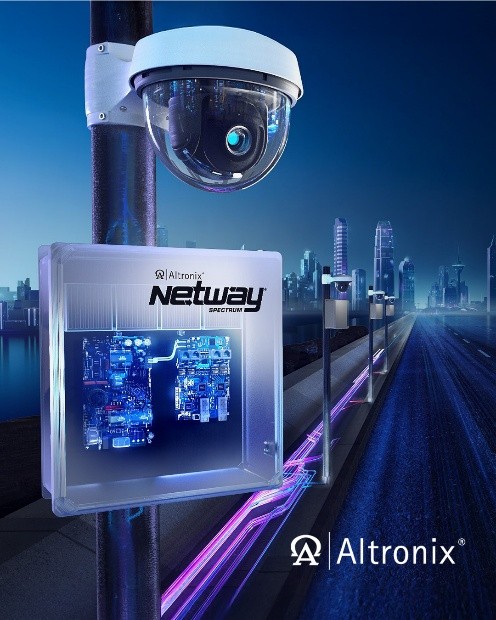
The Altronix NetWaySP4TCW53 is a 4-port hardened 802.3bt PoE switch designed for outdoor and remote security deployments such as parking garages, campuses, perimeters, and transportation facilities. This unit is equipped with dual fiber ports for long distance applications and delivers up to 90W per port (360W total) to power the latest IP cameras, Illuminators, wireless access points, and other edge equipment. Integrated EBC48 rapid battery charging enables constant power with seamless backup during outages, charging 32AH batteries in under 8hrs. NetWaySP4TCW53 features a NEMA 4/4X, IP66-11 rated enclosure to accommodate backup batteries and embedded LINQ™ Network Management, allows users to remotely monitor power diagnostics, reduce service visits, and keep critical security systems operating 24/7. Where required, 115/230VAC or 277VAC input options also available. Backed by a Lifetime Warranty.
Asylon Robotics: Humans + Robots + AI = Security Redefined
Asylon Robotics is redefining perimeter security by combining humans, robotics, and AI. Through autonomous ground robots (DroneDog™), FAA-compliant aerial systems (Guardian™), and a 24/7 Robotic Security Operations Center, Asylon delivers scalable, cost-effective protection. Their turnkey service enhances coverage, fills the security labor gap, and provides real-time monitoring across critical infrastructure. With 260,000+ missions completed, industry leaders trust Asylon to modernize and strengthen perimeter defense. Visit www.AsylonRobotics.com to learn more.


Dortronics’ 48500-EZ PLC Interlock Controller is a cost-effective solution for interlocking two to five doors with one or two zones, capable of controlling two independent interlocks. This single-board solution provides installers with complete control of all configuration options without the need for any software. The system is field-configured for door control, alarm response, security level, and interlock overrides, and accommodates traffic lights and violation alarms. The 48500-EZ Series works with access control systems, supports all door types, and can monitor external threat detection systems including tailgate alarms, metal detectors, and duress alarms with guard booth oversight to lockdown selected doors on command. Controllers can be paired to operate up to 10 doors from one to four zones with shared doors between zones. The 48500-EZ Series is ideal for air locks, clean rooms, sally ports, data centers, schools, jewelry stores, money rooms, and any facility where interlocking doors are critical to physical security.
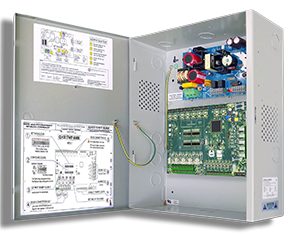

Echodyne helps organizations protect their people, operations, and assets as drone threats and other risks become more common and complex. Our patented radar solutions deliver precise tracking and classification of aerial and ground-based threats. High-integrity data extends reliable awareness across the full perimeter, reduces false positives, and accelerates response. The result: mitigated risk and protected operations when lives and continuity are on the line.
Discover more at www.echodyne.com.
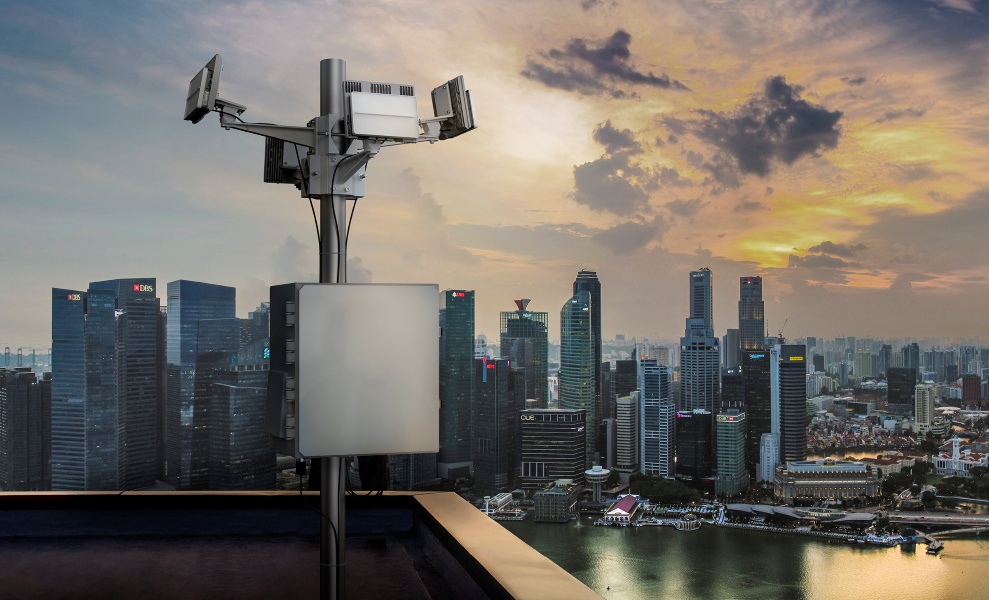

Radar Motion Detector: #MSK-101-MM
The MSK-101 utilizes advanced radar technology to distinguish human movement from small animals or environmental interference (e.g., rain, snow), providing precise, reliable detection. Indoor or outdoor/ wall mount or ceiling mount FMCW radar intruder detector with two alarm outputs & 66 feet max coverage. Operating temp -40f degrees to +158f degrees (IP66 and IP68 rated). The perfect detector where long range isn’t required and false alarms are unacceptable.
Numerous applications: vehicle gate approach notification, blind exterior corners of facilities, man gate presence. K-Band/24ghz assures no reduction in coverage from snow or rain.
Programmable via app or laptop. Available with relay outputs or POE.

PureActiv® is an Autonomous Perimeter Protection Software featuring patented Geospatial AI-Boosted Video Analytics. It enhances security by using advanced machine learning to reduce false alarms from sensors and cameras while integrating seamlessly with existing systems. PureActiv® provides real-time intruder tracking, automated detection, and geospatial visualization for superior situational awareness. Its extended detection range cuts infrastructure costs by up to 30% and supports flexible deployment across edge, server, and cloud environments.


Zenitel’s IP speakers enhance perimeter security by adding an extra layer of protection. With audio interactivity, staff can proactively intervene using live warning messages during an event while maintaining a safe distance. The result is a proactive and interactive solution for improved security.
Key features of Zenitel’s IP speakers include distributed speaker setup, speaker-as-a-microphone technology, automatic volume control, flexible zoning, and more.
With ONVIF compatibility, audio warnings can be triggered directly from a video management system, effectively deterring trespassers, loiterers, and other unwanted activities.
Thanks to ONVIF and SIP, integrating IP speakers into a security system facilitates automatic messaging, alerts, and instructions to guide occupants during emergency situations, crowd management, or lockdowns. This ensures an efficient and coordinated response, helping security system owners be better prepared for both emergencies and daily operations.